Dr Patricia Cardner from Park University in the States has used The Mental Game of Poker as a textbook in a class she is teaching on Poker Psychology. This is the course description:
PS 390 Selected Topics in Psychology: Intensive study of an area of psychology selected by the instructor on the basis of student need or current interest. Variable credit: 1-3 hours. Prerequisite: PS 101 or permission of the instructor.
Week 1 Introduction to the Psychological Issues Associated with Gambling & Poker Strategy
Week 2 Poker Strategy
Week 3 Motivation and Goal Setting
Week 4 Managing Tilt: Anger and Anxiety
Week 5 Concentration: Focus under Pressure
Week 6 Gambling Addiction and Treatment, Other Potential Personality Issues
Week 7 Detecting Deception Week
Week 8 Putting It All Together
Instructor Learning Outcomes
Students will demonstrate an understanding of the major psychological constructs that are important to gambling realms (particularly poker)
Students will develop an appreciation for the psychological nuances of various gambling games with a primary focus on poker
Identify and label psychological themes as they appear in gambling mass media
Explain the impact that gambling can have on a person and their family when an addiction to gambling develops or escalates
Understand the course of treatment that applies to gambling addictions as well as assessment procedures
Demonstrate high quality written and/oral communication skills through interaction with other students and the instructor utilizing correct psychological terms and concepts
Last night I was the guest on Jared Tendler's Mental Game Show on Quadjacks Radio. He has been hosting a regular show there for a month now, where he discusses mental game issues with a top name (recent guests have included Lex Veldhuis and Dusty Schmidt).
Clearly someone cancelled because I was on the show yesterday. We talked about the mental game in the context of some of the elite players I have interviewed, and also some broader journalism stuff.
I was not even aware of the 'Kindle Highlights' feature that showed you the most highlighted sections of a book, but someone pointed it out to me last week. Here are what most of our readers choose to highlight from The Mental Game of Poker:
While personal issues certainly affect performance, mental game problems can happen for far more simple reasons; for example, hating to make mistakes, having high expectations, and having a poor work ethic.
Highlighted by 11 Kindle users
‘When you look at a weather forecast and it says it’s going to rain, do you get mad when you go out and it’s raining? So why do you continually get angry when you know variance is going to happen?’
Highlighted by 12 Kindle users
You must stay focused on learning the correction to your weaknesses until it is trained to the level of Unconscious Competence—especially after your A-game improves.
Highlighted by 24 Kindle users
Preparation provides a way to make it more likely that you’ll perform in the front end of your ability, and less likely that your worst will show up.
Highlighted by 17 Kindle users
Here are some general things you can do to prepare to play: Review your long-term goals and set goals for the session. Review a list with the corrections to your common poker mistakes. Review your strategy for improving mental game issues. Use deep breathing, meditation, and/or visualization to steady and focus your mind. Listen to a favorite song.
Highlighted by 15 Kindle users
Look closely at tough decisions to see how you played them. Estimate how much variance influenced results. Calculate whether you accomplished the qualitative goals you set before the session. If you fell short, why? Review how you did in the areas you’re trying to improve (poker strategy and mental game). Did you see any progress? If you’re going to analyze hands later, write some game flow notes or thoughts about them that you may otherwise forget.
Highlighted by 25 Kindle users
Resolution keeps all the positive features that emotions add to your game and removes the negatives.
Highlighted by 18 Kindle users
When the emotional system becomes overactive, it shuts down higher brain functions.
Highlighted by 24 Kindle users
The only way you can stay in control at that time is by doing work off the table to reduce accumulated emotion.
Highlighted by 14 Kindle users
Recognition Deep Breath Injecting Logic Strategic Reminder Repeat as Necessary Quit
One of the two most quoted and commented upon chapters in The Mental Game of Poker is the chapter about 'Mental Game Fish'.
Basically we say that most good players are still fish when it comes to how they deal with the mental side of their game, and we give a list of examples of what it is to be a mental game fish.
So ahead of the holidays we have released it as an excerpt, see how many you score.
As it's approaching Xmas, we have put the Mental Game of Poker on sale (Which may continue in January too as everyone is skint at New Year). It is now retailing around the £16-£20 mark for softcover, and £7.12 for Kindle.
Amazon are awesome, but some things about how they work have been annoying. Most notably that when they are out of stock, they put a massive 'Out of Stock' sign up on the book page, even though there six other amazon traders selling it, including one which is fulfilled by Amazon themselves - so for all intents and purposes it is very much NOT out of stock.
Anyway, we hit a post-black Friday 12 month sales target yesterday with the book, 5 months early, so I am happy enough. I say post black Friday because the goal for the year obviously rapidly changed, when we launched the book on historically worst day in the history of poker to release a book.
Towards the end of the year, we will finally work on Book Number 2. We had so much material we had to leave out we knew a second one was in the pipeline, hopefully the response will be just as good for the next one.
There is a superb book out at the moment called The Talent Code by Daniel Coyle. It charts the success of high performers in just about every discipline you can think of, and completely dispels the notion of natural talent, as it proves time and time again the correlation between intense practice and success.
One of the most interesting recurring themes in the book is something called 'Talent Hotbeds', which refers to the fact that often the most successful people in certain field are from the same school or training centre.
Such examples Coyle cites include Brazilian footballers, the Spartak Tennis Camp in Russia, the art Renaissance in Italty, skate boarders in Santa Monica, and the Punahou golf school.
We can also probably think of countless examples ourselves in popular culture like the Seattle grunge scene, Motown or even the Disney Club in America that created many of today's pop icons.
The proximity of all these masters in their craft is usually either put down to either fluke or genes. Coyle brilliantly argues that the emergence of these hotbeds is, in fact, inevitable. What we call talent is actually a direct result of the level of practice that takes place in them.
The reason why Brazilian footballers are so majestic is nothing to do with genetics. It is because most Brazilians grew up playing an indoor version of the game, futbol de salao. The ball is smaller, and heavier, which means that a greater degree of control is developed.
The reason why the Renaissance in the 14th century created so many talented artists is equally as predictable, in hindsight, because artists like Da Vinci and Michalangelo all spent five year apprenticeships working under similarly revolutionary artists.
The Spartak Tennis Club, which has produced most of the top ten ranked female tennis stars in the last decade, was so successful because they literally spent hours a day focussing on every minutia of technique to the smallest of details, literally practicing daily in slow motion to develop skill.
The Brits are enjoying
a lot of success for a
small nation
Natural talent is a vastly overrated concept, these hotbeds prove that how you practice is the key to success.
Poker Talent Hotbeds
The concept of talent hotbeds clearly exists within poker, and proves what many of us have always thought about the game. The most successful players tend to have with them an entourage of like-minded friends who quickly replicate their success.
In the early days of the poker boom, it was no doubt the Scandinavians who were leaving their mark on the worldwide poker scene.
Another great example is the TwoPlusTwo community, who have developed hundreds upon hundreds of successful players, in particular the early post boom internet whizz kids, stemming from their hand analysis forums. Here is an example of a talent hotbed that exists online, rather than in a specific geographical location.
Right now it is the young British players who are the latest hive of talent in the game, taking down a disproportionate number of bracelets, EPT titles, and triple crowns for such a small nation.
A great example within this hive is triple crown winner Jake Cody winning his bracelet this year, and his best friend from school, Matt Perrins, taking down a triple draw bracelet the very next day. Most would chalk this down to an unlikely fluke, but it actually seems a certainty when you think of what no doubt preceded it.
What these talent hotbeds all have in common is that the people involved practiced their craft in a different, more effective way, something Coyle calls 'Deep Practice'. What I think this translates to in poker is simply the act of discussing hands with other players.
As I understand it, Cody and Perrins both started playing cards at school, and no doubt have spent every waking minute since then discussing the game together. There was no wonder they both became so successful.
Ask just about any poker player who is successful what the key to their improvement is, and they will at some point mention that discussing hands with their friends played a massive part.
Whether it's from one on one coaching, hand analysis forums, or just discussing it in person during tournament breaks and travel, it seems the most effective tool we have at our disposal is community.
Pushing the Boundaries
Like-minded friends
One of the fundamentals of deep practice is to challenge yourself to the point where you actually fail.
Just like a weightlifter who lifts a weight they struggle with, the process of attaining skill first requires you push the boundaries of what you are able to do.
This is where having like-minded friends probably has such value. Unlike just about every other form of poker practice, discussing hands with other players comes with it a powerful bullshit detector.
Because of variance, it is very easy to justify to ourselves that we made the right play, if we win the hand we can tell ourselves we played it correctly, if we lose the hand we can say we got unlucky.
But having your game critiqued by your peers inevitably challenges you to a point you perhaps could not do on your own, it takes you out of your comfort zone and forces you to think of your game in a different way.
We don't really have to look far for a talent hotbed in action. If you are reading this, then you have stumbled across one already. Pius Heinz was of course a PokerStrategy.com free $50 player before he became a world champion, and no doubt the videos, coaching, forums, and community of the site had a great impact on helping him along the way.
It certainly won't surprise me if we start seeing more homegrown PokerStrategy.com players taking down major titles in the near future, following his lead.
Poker can be a lonely isolating game if you are not careful, it can be very easy to shut yourself off from the rest of the world. Take a tip from the poker talent hotbeds and get out more, get talking to people, and get involved in the many opportunities to be part of a community that poker can provide.
My latest column for PokerStrategy.com. Please check them out for more of these, as they always appear there first.
There is a big secret in poker. Everybody is doing it, but nobody ever admits to it.
Deals.
I was talking to someone about the Main Event yesterday, about the possibility that the final three men in the tournament did a deal.
The guy I was chatting to felt they played just like they had made a deal (ie. early fireworks), but thought that it was not allowed in the Main Event.
I didn't catch a great deal of the footage so couldn't really speculate, but I did mention it happens a lot in WPT/WSOP/EPT events, but never gets reported.
He was surprised by this, but I followed up by estimating that most 'big 3' main events end in a deal that wasn't reported.
I felt inclined to back up what I thought that I knew. I have reported on hundreds of events in the last few years and know that it happens quite a lot, but wondered just how much. I reached out to my friends, in particular tournament organisers and the guys who report live from these events, to get their own estimates.
I felt that at least 60% of live tournaments end in a deal, and probably closer to about 70-75%. Almost everyone I asked confidently told me it was much higher, closer to 80-85%. This didn't shock me at all.
It never gets reported, but it happens all the time. If you are watching the live updates from a tournament and all of a sudden a 10 minute break is announced (in particular if it's reported that the players decided among themselves to have a break) that seems somewhat unscheduled, then they are usually discussing a chop.
Why Are Deals Never Reported?
It seems in just about everybody's interest to keep deals quiet. The players usually keep pretty quiet because they would sooner appear to have been 'playing for the win' and often deals get derided by the poker community as minus EV.
Peer pressure is very strong in poker; rarely is a deal made public without certain corners of the poker community ripping it to shreds. The deal is usually very good for at least one of the players, but there is always someone else who is percieved to have made a mistake.
The tournament organisers don't like them being reported because it is in their interest to showcase a huge first prize. Someone taking home a seven-figure score is much better PR than three guys walking away with similar six-figure purses.
The TV stations have the biggest interest in keeping deals quiet, because they have stories to tell and drama to create. A heads-up match becomes significantly less exciting when you know that both guys took $500k each and are just playing for $20k and a trophy.
But with such a high proportion of players demanding deals at the end of live events, surely it is abundantly clear that we are getting the payout structures wrong?
Nobody wants to admit to wanting a flatter payout structure at the start of a tournament. When it gets to the business end of a tournament, for most of us our instincts kick in.
Human Nature
Did Pius chop?
We probably will never know.
There are countless studies out there that demonstrate it is human nature to protect what we already have, or perceive ourselves to have, rather than taking risks for a big payoff.
You only have to watch the game show Deal or No Deal to see this in action. Most of the deals that are made are massively minus EV near the end of the game when they still have a big box in play, because they want to protect a perceived amount that is theirs.
They have decided an amount they want or need, and will pass up great chances to win more to protect it.
Likewise, those players who lose a massive box at a critical moment go the opposite way, and behave recklessly, in an attempt to regain what they believe to be their rightful winnings.
Everyone is 'going for the win' at the start of a tournament because it seems so far away, but when it gets down to the big money, many of us start mentally earmarking the amount we want to definitely walk away with.
Tournament poker is extremely high variance. We all want to make every decision on its long term merits only, but realistically most of us could never get a reliable long term sample of live poker tournaments, there simply are not enough of them.
It is understandable why all these deals go on. It is not like online where you can refuse a deal and load up 100 more MTTs that week without giving it a second thought. A lot of time, travel, expense, and frustration comes with live tournament poker.
Now at this point a lot of tourney grinders and pros will be wanting to tell me that they never deal, that dealing is minus EV, they always play for the win, and that it is the fish that tend to deal.
There are of course plenty of players, strong ones at that, who do refuse deals and more power to them. But with such a high percentage of tournaments ending in chops, it is clearly not just the fish that make deals.
Thankfully even though many tours claim they do not allow deals, or at least any deal must include an amount to still be played for, almost all of them do let it happen. The players paid the buy-in and the rake, so they should be entitled to have a say in what they stand to win.
It is obvious that live poker tournament payout structures are not flat enough, but do we need to change things and should the deals be made public?
The only reason the deals should perhaps be a little more transparent is for those people with a genuine interest in the winnings outside the tournament - in other words the tax man and backers.
Of course this is the responsibility of the players, and an attempt to cheat another party by not informing them of a chop could backfire, if the player actually goes on to win, but takes down a lesser prize.
But other than the backers, I happen to think that most of the poker community would actually be much happier leaving the system the way it currently is.
In other words, maybe everyone would be much happier to keep the prize pools as advertised, and deal behind closed doors. Tournament organisers get to boast a massive first prize, TV producers get to showcase the drama of massive pay jumps and the players get a prize they are happy with - without having to face the derision of forum trolls.
The Mental Game of Poker has had some amazing feedback that really has exceeded our expectations.
It took a very long time to write, largely because we had so much more material that didn't make it into the first version, so we always knew that we were going to do a second book, or at least get that material out there in a different format.
We are now planning that next stage, and are asking anyone who has read the book to help guide is with what they would like to see with project two. If you have read the Mental Game of Poker, please spare a few minutes to help us with this:
Its nice to be climbing the rankings on Amazon for the search term 'poker' and an honour to be currently outselling such a great book like HOH2 - but lol at what is beating us right now.
A couple of videos are doing the rounds on the poker forums of Tony Hachem, brother of main event champion Joe, conducting himself in a less than humble manner.
In these videos (below) you see him acting pretty arrogantly in the WSOP main event. This has led everyone to ask the same question, who does he think he is?
The quick answer to that one is - Joe Hachem.
Tony is getting a lot of criticism on the forums for his delusions of grandeur. He is acting like he is a world champion himself (a not very gracious world champion), when really, what has he done to justify the behaviour?
In fairness, he has got a pretty decent looking record, lots of cashes, lots of finals, a couple of wins, and one six figure score. His total live tournament earnings are well over $500,000, which I thought was impressive.
Until I discovered, at the time of writing, that 1,666 other players have over $500,000 in tournament winnings, according to the Hendon Mob database.
It's still impressive of course, it's more than you are ever likely to see on my own record, but when 1,666 other players can boast the same, does that justify the behaviour?
The reality is nobody should be sounding off like Hachem is here, but they look all the more ridiculous when they don't have much evidence to back it up.
It used to be that the only noticeable ego in poker was that of Phil Hellmuth. He built his reputation, his brand, and became a one man industry with his trademark displays of arrogance.
It used to be just Phil that would get labeled egotistical, but I think most of us are closer to the Poker Brat than we might care to admit.
Whether its poker, or anything else for that matter, people these days seem to feel a sense of entitlement towards just about everything. Everybody believes they deserve success and happiness more than their peers.
Constant media exposure of successful people makes every dream seem achievable and easy, reality TV turns nobodies into stars overnight, and advertising makes us believe we must have more and more expensive luxuries.
We are led to feel we deserve all the trappings of success, but rarely are we reminded of the hard work that is required to get there.
Premature Exposure To Success
Poker is no different in this regard, in fact if anything the sense of entitlement is accelerated. Variance means that we can all experience what it is like to be an elite player momentarily, without having to do the work required to get there.
If you want to be a Doctor, you have to spend most of your twenties in higher education and working every hour of the day, if you want to be a champion poker player you can literally do it overnight if the cards fell your way.
Such an early exposure to success is probably why we all stuck with the game, we most likely all ran like god in our first few months to have kept up the enthusiasm to learn the fundamentals.
But too much early success can be very damaging if you do not recognise the role variance played. It creates very high expectations, which lead to frustration, stops you working on your game, and even puts you in games you can't beat.
I have seen multiple figures quoted between one third, to three quarters, but whatever the number, a high percentage of lottery winners end up broke. This is because they find themselves with all the results of success, without the successful mindset needed to get them there, and maintain the lifestyle. This is a great metaphor for poker, which highlights what early success can do to a player.
In the case of someone like Tony, that early exposure to success might not have even been from his own actions at the tables. Being the brother of a highly successful world champion must surely have rubbed off on him and had some influence on future his behaviour at the felt.
I can completely sympathise with that too, it cannot be easy being in the shadow of a world champion. Jealously can play a massive part in your demeanour as a player, I know that first hand.
I have lots of friends who are highly successful players, and I regularly interview the best in the world. Because at times they can make it look easy at final tables, it used to create an incredible sense that I should be able to do what they did too and need to catch up.
It felt unfair, and I felt I deserved it too because I would see them winning a tournament by playing ace-king the same way I would, or even worse by sucking out on someone. What I failed to notice, and what most of us never see, is all the hard work they would put in away from the tables to put themselves in these positions.
Because we only see the results and a small sample of hands, and never see the work that led up to that point, our perception of what we and other people 'deserve' is greatly skewed.
We Are All Poker Brats
And before you discount yourself from thinking too highly of yourself, ask yourself this question, how often do you use the word fish? Most of us are guilty of labelling the competition as fish, referring to fish as being victims of our superior skill, and generally berating players who get lucky against us like they do not deserve to win.
It may be much more subtle in its manifestation, but this sense of entitlement over perceived lesser players is no different to Hellmuth saying he deserves to win every tournament.
I'm not saying an ego is a bad thing either, assessing your edge against the competition is the fundamental skill in game selection, which is of course one of the fundamental skills in poker.
But most of us greatly overestimate our edge, we all claim to be in the 5% of players that see a profit, and we all claim to be unluckier than most. Tony Hachem is embarrassing himself in these videos, but we are probably all guilty of acting the same way on a smaller scale at times in our poker careers.
Of course if we really do deserve to win more than others, I am sure the big man upstairs will help us out.....
One of the most popular concepts from The Mental Game of Poker is something Jared devised called 'Inch Worm'. I must say, this helped my game and understanding of how learning works massively too, and I have managed to apply it to so many other things in life.
So here is the excerpt, not sure if it necessarily will be as revealing on its own without all the other material alongside it, but hopefully it will help.
I read a really good book recently called Adapt by Tim Harford. He is an Economist discussing how failure is a necessary part of success. The book cites various instances where people have used previous failures to ultimately lead to success in their lives, and others where a zero tolerance approach to failure has led to the downfall of people and businesses.
This got me thinking about poker. There are very few games or careers out there where you have to deal with failure as much as you do with poker. You can do everything right and still lose consistently for thousands upon thousands of hands. In fact my mother could realistically beat Phil Ivey heads-up for a sustained period of time if the cards fell her way (Which is ultimately the greatest and most profitable part of poker).
Even the best players
lose on a regular basis
Despite how much failure we are exposed to, I am not sure that most of us learn from it as much as we should. You only need to see how badly a lot of us can deal with a bad beat or a downswing to demonstrate that. Sometimes it can really affect your mood away from the table, other times it can greatly affect the way we play at the table, in the form of tilt.
I am fortunate to have worked intensively on a book on this very topic with mental game expert and PokerStrategy coach {communitylink=JaredTendler+level}. What I learned from the experience is that players who deal with failure badly usually have an underlying flaw in their approach to the game that causes them to act that way. This is stuff like having overly high expectations and not understanding the nature of variance.
One of the key points in Adapt is that we do not build failure enough into our game plan from the start, that too often we start a plan of action with very little room for error. Harford suggests success is much more likely when you build an environment where it is safe to fail, where one mistake will not lead to complete annihilation.
The most obvious way in which this is evident in poker is when players ignore the rules of bankroll management. On paper, bankroll management is the easiest thing in the world, in practice even the best players routinely ignore it. It is almost certain that if you play long enough, at some point you will go on a 20, 50, or even 100 buy-in (Depending on what you play) downswings no matter how well you play.
This is no secret, the information is widely documented and most of us know first hand what its like, but playing without the bankroll to sustain these swings is still the downfall of many players.
Harford also suggests that the most successful businesses thrive because of a constant trial & error approach to their development. I am reminded of a fantastic quote by Thomas Edison which sums this up perfectly:
"If I find 10,000 ways something won't work, I haven't failed. I am not discouraged, because every wrong attempt discarded is another step forward". Thomas Edison.
You would think that with such a prolific rate of failure in poker, that this is an ideology most of us would buy into. That if we do not win money after a session, we are at least provided with an opportunity to improve.
But many of us have a much more absolute view of wins and losses. The ironic thing about poker is that the very thing which creates such a high ratio of failure, is also the thing that prevents us from learning from it - variance. It is very hard to accurately assess how well you played in any single session because variance played a huge part, so most of us fill in the gaps however we choose to.
Usually that is this way: If we win, we played well, if we lost, we ran bad.
Thankfully if you are reading this, the chances are you are working hard on your own game and less likely to fall into this category, but it is still very important to be aware of it. The best players I have witnessed in my years as a poker journalist are the ones that, even to this day with all their success, still work on their game as enthusiastically as we all did from the start.
Conversely, there are those players who believed they had nothing left to learn when the online age came about, or when the games got tough after the 'glory days'. These are the players who have found themselves getting left behind and struggling to beat the modern game (I'd love to be writing this as someone who didn't make these mistakes, but I'm afraid I am one of the guys who stopped working on his game during the glory days and is playing now catchup).
Perhaps the most important lesson, and one which we are coming round to unfortunately now it may be too late, is having a plan B. Black Friday and the ensuing Full Tilt drama has exposed that many of us were completely unprepared for a major disaster. Players in America are currently in limbo with their main source of income unavailable to them, and players worldwide have their money stuck on Full Tilt in the same situation.
These are not the only instances of adversity for poker players of course, there have been superusers, bots, scams, collusion, cheating scandals, armed robberies, and much more.
If we have learned anything since Black Friday, then surely it is to no longer put your eggs in one basket. Do not put all your money in the same poker account, in fact do not keep all your poker money in just in poker accounts full stop.
The same goes with your time, it seems pretty ridiculous to devote your life to just playing poker when there is so much uncertainty in the industry the world over. Whether it's an education, another career, or just another hobby, it just makes sense to have a broader range of interests beyond poker.
It goes against just about every instinct you may have, but learning to expect failure and make the most of it is probably one of the most underestimated skills in the game. Not many of us plan for failure in poker, but all of us have to face it.
As this is a certainty, perhaps the only thing we can do is build ourselves an environment where failure is never final, and there is always something we can learn from it.
"If you want to succeed, double your failure rate." Thomas J. Watson
I got an interesting email this week from someone interested in The Mental Game of Poker. They actually asked if I would be interested in coaching them, much in the same way that Jared has coached hundreds of poker player’s one on one.
I was pretty flattered, but even though I know my writing buddy Jared can charge a pretty decent premium for what he does, I said no. Although I am more familiar with the material in The Mental Game of Poker than anyone but Jared himself, and have spent more than two years effectively shadowing him, I know enough to know I am still unqualified to coach someone.
Jared has a master’s degree in counselling psychology, a mental health counselling license, over 3600 hours of supervised counselling hours, and thousands more working with golfers and poker players. I on the other hand am some lucky donk who got to write a book with him, and I think it would be potentially be a bit of an insult to what he does to think I could do it so easily. There are actually a few of people who have set themselves up as mental game coaches who I think are equally unqualified as I am.
But Jared isn’t as cynical as I am, and he actually thought I should go for it, having a unique perspective of being from a poker background and working so closely with him. My official line is still no on that one, but we both did think it would be an interesting experiment to see just how well, or how poorly, I would get on if I tried my hand at mental game coaching.
So I am actually now going to take up the guy who contacted me on his request and try and help him with a tilt problem. I am not charging, it is just a one off, and Jared is going to listen in to both critique me and also rescue the poor sod if I start giving him terrible advice. It’s a win-win as far as I am concerned, either I look good and help the guy, or I look bad, Jared helps the guy, and I make it clear just how skilled he is at what he does.
It is actually going to be fun setting the line on when in the session Jared steps in because I am giving awful advice.
It could end up being a podcast type of deal like some of the other client sessions Jared has recorded, and will most likely happen next week.
I must also admit that I am one of the many who have done a complete U-turn this year and cheered on Phil Hellmuth Jnr at the World Series of Poker.
He has answered most of his critics this year. Three non hold’em runner up places, including the most prestigious non hold’em event of the year, over $1.6 million in winnings, including his first seven figure score ever (Yeah, I was surprised at that too), and the player of the year award almost nailed on.
He has impressed me as a player, but more as a person. His attitude has been great this year, and his post-match interview with Kara Scott was a breath of fresh air. He was very complementary of his opponent, admitted he had made some errors along the way, acknowledged he had been too cocky in the past, couldn’t bring himself to say he was the greatest when asked, admitted the criticism has gotten to him at times, and generally conducted himself like a gent.
I think most people would be crushed to come second three times in one series, and amazingly, I think he took it much better than many of us would have. He was upbeat and jocular.
In The Mental Game of Poker we categorise different forms of tilt, one of them being what we call ‘Entitlement Tilt’, which we preface as ‘Classic Phil Hellmuth Tilt’. It is the tilt that comes when you believe you deserved to win more than someone else – because you think you are better than them, because you think you work harder than them, because you think you have been unluckier than them, because they are French etc. Entitlement tilt happens when you do not truly understand the role of variance in poker and/or are unable to make a proper assessment of yours and your opponent’s relative ability.
Hellmuth obviously has demonstrated entitlement tilt throughout his career, telling anyone who will listen how he deserves to win more than the rest of us mere mortals simply because he has 11 bracelets. If anything was going to spark off ‘classic Hellmuth tilt’ it would be coming runner up three times in a row, but not today. Yes he still moaned a bit, but who wouldn’t? He took it like a champ and I think we are seeing a new Phil Hellmuth, or perhaps, the real Phil Hellmuth?
It is no surprise to me that that Phil 2.0 comes after he parts ways with UB. Whether it has relieved him of some pressure, or more likely, he doesn’t feel the need to act like the Poker Brat. Let’s face it, if Phil endorsed your products, the next best thing to winning the main event would be him flying off the handle and acting like a prick on ESPN, giving your brand lots of TV time. Were most of his temper tantrums fuelled by loyalty to UB?
Perhaps as well, not being sponsored and the new vulnerability of the poker industry has forced him to work harder on his game? Pre Black Friday you would expect him to have his pick of seven figure sponsorship deals, and while I still think he has lots of potential to earn a living just for the name branded on his baseball cap, perhaps he is playing off his own dime a bit more, thus taking it a lot more seriously?
It could be one of many things. Whatever the reason, I love the fact that the new and improved Hellmuth the player has emerged at the same time as the new and improved Hellmuth the gent (And I presume one is causal of the other, rather than just a coincidence). I still think we will see the Brat emerge from time to time, an ego and temperament like that don’t vanish off the face of the earth, but if he keeps this up, he will certainly have a fan in me.
Wow, been a few weeks since a blog update. I hate these ‘quick round up of the last two weeks’ type blog posts, so let’s just get it out of the way.
Book is starting to go very well indeed, we just celebrated a big sales milestone this morning (I’m too coy to say what it is) and general interest, positive discussions on forums, and positive reviews, are all on the up and up. I’m actually yet to see a bad review if I am honest, I am sure it will happen, so I’m not getting too cocky, but it’s nice to know with a degree of certainty that we have produced a quality product.
I was aways going with this picture.
Jennifer Tilly bought a copy, which we were both pretty excited about. It’s not every day a bracelet winner, Oscar winner, and most importantly regular on Family Guy, buys your book. Jared missed out on seeing her buy the book at the Rio so he went looking for her to sign it. It made me wonder whether the owners of the book store might have just been playing a little joke on him to watch him wander round the WSOP with a pen in his hand asking if anyone had seen Jennifer Tilly.
I also have it on good authority that Brian Townsend has a copy, and he had ‘heard good things about it’ prior to getting it.
The book is also now available on amazon.co.uk (and correct me if I am wrong, but that should make it available to anyone else in the EU on their respective amazon sites).
Anyway, I haven’t been blogging so much because I have been busy with a project at PokerNews that is nearing completion. Nothing exciting, well it is kinda exciting, but not a ‘watch this space for big news exciting’, just quite interesting, kind of.
Oh well, the blog is now up to date, got an actual interesting one on its way about Hellmuth in the not too distant future.
One of the strangely gratifying processes of the entire book writing process has also been one of the most mundane. Because we self-published the book, we are learning as we go along about the ins and outs of the publishing process. One of the things we didn’t do the best of research on was distribution. It was really important for me to ensure that people in Europe got the book in their hands quickly, and as the printers are in Arizona, this means that I personally send a lot of the European orders from a stockpile in my office.
Every day I go down to the post office with a bagful of parcels, exchange pleasantries with the women behind the counter, and piss off anyone unfortunate enough to be behind me in the queue. It is the sort of thing that could be a pain in the arse for many, to have to do it every day, but I really love it.
Obviously the fact that I am there every day with a bagful means that we are selling books, so no wonder I am happy. Although I hated working in customer service, it’s always been a priority of mine and I think I am good at it, so there is also some satisfaction in knowing that the orders are getting there on time, and hand sent by one of the authors no less.
There is also a big part of me, that, not sure why, always wished he had his own little eBay type business. So this is the next best thing.
The book has been on Amazon just over a week, and sales have been good. We have already jumped a bunch of places in the amazon rankings for our chosen search terms, and at the time of writing we have 12 very good reviews, all of which have been given 5 stars.
There are some rather frustrating elements to the whole amazon process. One of the oddest things is amazon do not allow us to set our shipping prices and ETA, so it shows the standard as $12 and 22-44 days for outside the US. The reality is that the shipping is closer to $8 and the ETA is 2-5 days. Very frustrating because that must really put some people off buying at all, and in other instances people have been choosing shopping options that are really expensive (which we are refunding the difference for after).
So if you buy the book, pick the cheapest option, I assure you it will get there in less than a week.
It’s all good though, it’s nice that most of our problems at the moment are the good sort of problems. The response and the reviews have been amazing so far, and there seems to be more and more buzz, and the average sales seem to pick up, on a weekly basis. I think that is because word of mouth and customer reviews are starting to drive it, now that people have had time to finish the book. We started our PR campaign by churning out lots of written content for magazines & websites, but are finding that it doesn’t convert to sales much. What does work well, which I think is a sign of the times we live in, is anything where we can interact with potential customers – forums, social media, video, interviews, and live coaching.
It’s all been a fascinating learning process if nothing else.
One more thing, for fans of this blog. We have about 30 copies of the book which have cosmetic damage on the front cover – nothing wrong with the books or content, just blotches on the cover that we couldn’t possibly send out to customers who paid full price. However, if anyone wants to buy them we are going to sell them at $25 each (normal price $44.90) + whatever the postage costs. If anyone is interested just email me at barry@mentalgameofpoker.com – and you can rest assured I will be taking them to the post office first thing in the morning.
It is funny, but I appear to have gotten a much more enthusiastic response from my non poker friends that my book is on Amazon, than when it was first released. I think that makes it 'legit' in most peoples eyes.
To celebrate the amazon launch, for one week only we are offering 35% off when you buy The Mental Game of Poker on Amazon. Please note, if you are outside the USA, choose the 'Standard Shipping' option. It may say 21-42 days, but that is Amazon covering their own back, we ship the next day and it usually arrives in 1-5 days maximum.
If you have already bought the book, you would do us the biggest favour in the world by posting a review on Amazon. We have seven up already and they are all really good, but we need as many as we can get.
“Tendler and Carter also take a fresh approach and give you actionable things you can do to improve your mental game but also measure your improvement.”
- Bill Rini, Legendary Blogger
“I’m a tilt monkey and finished the book with the confidence knowing I can diminish tilting at the tables.”
- Paul “Tao Pauly” McGuire, Author, What is Jack Tripper Stole My Dog?
“Raises the bar so high for poker mindset books, other thinkers may not be able to clear it.”
- Jack Welch, Poker Author, Editor & Player
“Tendler provides real steps and real answers for poker players involved in the day to day struggle who are too often beating themselves.”
- Jesse May, PartyPoker “This book contains advice that simply isn’t out there.”
- Matt Perry, Bluff Europe
“Quite simply it is the only book you will ever need regarding the mental side of poker.”
- Matthew Pitt, Betfair “This book is the first of its kind and should be considered mandatory reading for any poker player.”
- Hunter Bick, DragTheBar CEO
“The book is full of so many ways to help you improve your emotional control that they are literally spilling out from the pages.”
- Lee Davy, Poker Journalist
“Any player that hopes to have long-term success with poker needs to have this book in their library.”
- Verneer, Cardrunner’s Coach
“Concisely written, painstakingly detailed and fantastically insightful.”
- Daniel Smyth, WPT Magazine
“Jared Tendler’s book is by far and away the most advanced Poker book out there”
- Colin, Customer
“This is the most advanced, detailed information in one spot that I have ever seen on the mental side of poker.”
- Charley, customerPublish Post
“I now easily see how losing players continue to be losing players…they are, ‘Mental Game Fish.’”
- Rey, Customer
I cannot imagine how amazing it must feel, for two lifelong friends to pull off such a unique back to back like that. They really must feel like they have the world in their hands, and why not? I’ve interviewed both men before and they both struck me as both hard working, and unassuming, young guys.
That 100% is the link with the invading British players btw. The last two years the Brits have dominated the WSOP and the EPT for those two reasons. Forget DNA or natural talent, what all these guys have in common is that they clearly work very hard on their game, and despite all their success have managed to remain level headed. I’ve seen it in Jake and Matt, as well as countless others including JP Kelly, Stuart Rutter, Toby Lewis, David Vamplew, James Keys, John Eames, Rupert Elder, and many more.
I think factor A (working very hard on their game) and factor B (humility) complement each other greatly. What they also seem to have, which I think is the net combination of both criteria, is a much solider understanding and acceptance of the role of variance in poker. Variance is the factor that allows players to greatly under or over estimate their own level of skill. It is this that stops players from feeling they have to work on their game, or recognising where they have shortcomings, which is what ultimately leads to the downfall of great players.
Obviously these young guys have ran well recently, but the big difference between them and many others like them, is that they most likely are fully aware that they ran well and have not allowed it to inflate their egos.
It also helps, massively in my opinion, that they have all found each other. The fact they get to travel the world (and the UK circuit, and no doubt skype) together invariably means they will be talking poker 24/7 with other great minds. I wager most of them will point to this as the single biggest factor in their development as a player; likeminded friends.
The Americans might not think they are so grounded because they don’t quite ‘get’ the British rails, so over the pond they may have an undue reputation as thuggish. It’s actually something of an ironic contrast, that the ferocity of the rails has a direct negative correlation with the temperament of the player. It seems the bigger and louder the rail, the quieter and humbler the player being cheered.
If I get time this week, I may blog on how Perrins won a bracelet in a game he has never played before, because that is also a fascinating subject from a mental game point of view. Until then this just leads me to ponder what the over/under is on Brit bracelets in Vegas this year, I am thinking its 5 (would have said 4 at the start).
I was once again a guest on Sky Poker last night, and once again had a great laugh. It was a lot more ‘natural’ this time around, once again we got to talk about films and the team were very generous with the amount of time they devoted to plugging The Mental Game of Poker. We also got to analyse some hands played by non other than…..my mum.
She started playing on Sky Poker after my last appearance and has come 2nd in two bounty tournaments in the last week, so we reviewed a few of her hands. Deffo made for some fun TV I think.
Great time had by me and I hope they ask me on again.
I am going to this this weekend and will be giving out some free copies of The Mental Game of Poker as prizes. This really is an exciting event and well done to Cheryl who organised it all, I think this event looks better than any other charity event I have seen in a long time. I am also pushing to get anyone who wins one of the great added prizes to pledge 10% of any winnings in that tournament to the charity also.
This is a really great blog where Jared and James worked through his motivational issues while going for SuperNova Elite. There is a funny part involving a chair which I wont spoil for you.
We were interviewed by PokerStrategy.com and also have some guest articles on their site.
Wow, really don’t like doing these rushed blogs, but we are so busy as the response for the book is really starting to take off. Normal service will be resumed next week.
Possibly our biggest fan boy so far, Matthew Pittover at Betfair, has written another blog around our book. This one was pretty personal to me, and recounts a story of my own that appears in The Mental Game of Poker. Basically it was from the moment where working with Jared Tendler probably forever changed my entire outlook on poker, work, and life. Rather than recounting my story, I’ll see what Pitt says about it:
“After reading The Mental Game of Poker a couple of times something really struck a chord with me and that was co-author Barry Carter's story. I won't relay it word for word but he discusses when he first spoke to Jared Tendler and was asked what his image of a winning poker player was and Barry says that the image he thinks of is a poker player sat behind a huge pile of chips, proudly showing off their winning hand having won a major tournament. But the problem was that Barry was not playing in many tournaments so how could he ever become, in his own eyes, a winning poker player.”
“When I read that I was thought they had got into my own mind and were writing about me. I think it is a common problem with poker players who work in the media because most of their time is spent writing about players winning major tournaments and reporting live on the various tours around the world. Behind every poker writer and blogger is a frustrated poker player, trust me on that one.”
It was a huge moment for me when Jared made me realise my own perception of success was skewed. Every Monday for the last 3 or 4 years I find myself reporting on the story ‘Man Wins Poker Tournament’ and as someone who plays the game, but is yet to win a live tournament (a proper one, not a £10 rebuy), it did really quietly and sneakily distort my view of success and my own game. I barely ever play tournaments, I prefer short sessions and thus SNGs and cash games, but the textbook image of success for me was always the image of a man holding two cards up at the end of a tournament he won.
So I was judging my own success based on a metric that didn’t even register in what I was actually doing, I was getting pissed off at not winning a live tournament even though I wasn’t playing any. Once Jared made me realise how silly this was, it really freed me from poker in a sense. No longer do I subtly beat myself up for not having a ‘1st’ on my Hendon Mob database. I think this not only helped me take extended breaks from poker to pursue other interests (Including writing a book) it also helped me enjoy poker again in the social context it should be enjoyed.
I like Pitt’s other comment of ‘Behind every poker writer and blogger is a frustrated poker player, trust me on that one’. I could not agree more. A journalist in any other walks of life is able to distance themselves from the people they are writing about. I couldn’t write about Wayne Rooney smashing a wonder goal in from 30 yards in the Champions League and beat myself up for not doing the same, but most poker bloggers could very feasibly buy into whatever tournament they are covering. They are also privy to all the good fortune and misplayed hands of the eventual victor, which can skew their perception on whether they could have, and should have, somehow won the tournament themselves (I wrote a blog on it yesterday as it happens). This is not the exclusive domain of poker writers either, anyone who is good friends with successful poker players can feel this strange inverted kind of jealously




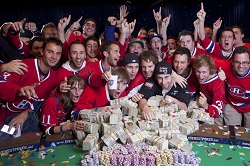
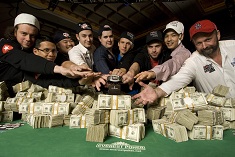
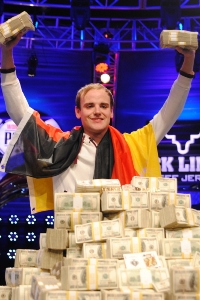

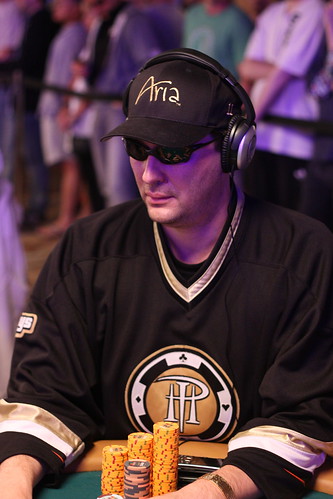 Constant media exposure of successful people makes every dream seem achievable and easy, reality TV turns nobodies into stars overnight, and advertising makes us believe we must have more and more expensive luxuries.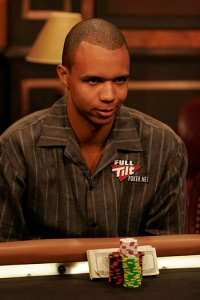


 Posts
Posts

