.

Guest Post from Matthew Pitt: Do You Know Your SEO From Your Elbow?

0 comments
Matthew Pitt (With PokerNews buddies)
I must be doing something right, because I finally have a guest post on this blog (There is actually another one in the pipeline too). The man who took over from me at UK PokerNews, Matthew Pitt. He has had a lot of interesting writing gigs in poker, and he knows a boat load more about SEO than I do.

You can learn more about Matthew Pitt at his blog. (Did I link to it correctly? SEO donk here).

Thanks to Matt, and here he is:


As someone who has worked in the poker industry for several years now I thought it would be a good idea to write a guest post for Barry Carter that fits in with his series on poker media industry articles.

Barry recently wrote an article entitled “How Do Poker MediaWebsites Make Money?” and within this article he mentioned terms such as pay-per-click and touched on the subject that a writer's employer may not care much for the quality of the content a writer produces because he is looking purely at how many customers click a specific link within the content provided. One way you can help your articles become more useful to your employer is to employ some basic SEO, that is Search Engine Optimisation, to your content.

The first thing you need to realise is that, in the poker industry especially, Google rules the world. Forget all the rubbish Bing and other search engines try to push on you about them being the best search engine or the most accurate etc Google is the daddy, the head honcho. You are at the mercy of Google and its unknown search algorithms. You are Google's bitch. You no longer search for something on the internet, you Google it; so does your mum and possibly your gran. Google makes the world spin around and being ranked number 1 in Google for a specific term is like holding the Holy Grail in your hands. Think about it. How often do you Google something and simply click the first answer without even looking or thinking about it? Exactly.

The way Google works is down to a number of secret algorithms that work in unison to create an extremely powerful search engine. Regardless if you think it is the best, the most accurate, the fastest or whatever, Google is the industry standard search engine. Although these algorithms are top secret, there are a few assumptions you can make about how Google works and how it ranks content it finds on the world wide web.


  • Google loves new, fresh content
  • Google knows how to read bold and italicised text.
  • Google likes it when content links to other highly ranked content
  • Google is happy when your article has some relevant keywords naturally occurring in your content
  • Google smiles when your headline is related to your content
  • Google gets mad when you blatantly copy other articles
  • Google starts to cry when you link to poor ranking content
  • Google does not like you trying to force readers to click links
  •  Google gets royally pissed off when you try to force keywords down readers throats
There are scores of others but those mentioned above are probably the most common and the ones you have the most control over. As you can see Google is almost like a living, breathing entity that adapts and evolves to bring what it determines is the best content for a person to read, watch etc. It is up to you (and your editor) to keep Google happy.

One of my first jobs in the poker media was to provide copy based on keywords. For months on end I used to churn out articles for some major sites based on keywords I had been given. For example, I would be asked to write a 400-word article about anything I wished as long as it mentioned “poker bankroll management” at least five times somewhere within those 400 words. Sometimes the keywords were perfectly reasonable but then they started to become a little obscure. I distinctly remember having to write a 400-word article that said “poker play online free” at least eight times. You try and fit that non-English rubbish into an article once never mind eight times. I bet Google hated those articles!

After writing between 500-750 of these I now automatically think of keywords whenever I am writing articles, whether the articles are news related or promotional material. A large percentage of the articles I write are poker-related and I know dozens of keywords and phrases that people use to search for other poker related material. In recent weeks I have described someone being dealt pocket aces as “Player A was dealt the best starting hand in Hold'em, pocket aces, and three-bet all-in” or something similar. That small sentence will rank in Google for terms such as:

·         What is the best starting hand in Hold'em?
·         Are aces the best Hold'em hand?
·         How to play pocket aces
·         How often will you get dealt pocket aces?
·         What is a three-bet?

Those five bullet points are all valid questions Joe Bloggs could type into Google and find my article with. Hopefully he will then read the rest of it, click a link to an online poker site and keep my bosses happy!

Emphasising your text by making it bold is another way to ensure Google picks up your content. At PokerNews I always write a player's full name in bold in news articles and keywords in bold in promotional articles. For example, “Get involved in this value-added promotion where we have six freerolls each with a $5,000 prize pool.” Google will read the bold text, think it is important and if someone searches for keywords such as “value-added freeroll” or “freerolls with large prize pools” guess which article it is going to bring up or at least consider bringing up for searchers.

By now you have probably cottoned on that SEO is mainly common sense and that continues when you want to link to other content. When you link to a specific article, particularly one that is not hosted on your site, Google goes all warm and fuzzy inside because you are essentially vouching for that site and spreading the love. If that site has linked to other “good” sites and they are themselves linked to then Google gives you some extra points (in secret of course) and ranks you higher.  This is why I get frustrated when sites copy my work or use it to create articles of their own and do not credit me. I have written articles in the past that were exclusive to me yet they have ended up on a rival site a few hours later and complete with spelling mistakes! Had they copied it and said, “according to UK PokerNews” with a link to the original article Google would have been over the moon and given them a hug. Instead Google will have marked them down for being plagiarisers and possibly future articles they write by themselves will be marked down too. I give credit all of the time whenever I use a site such as Blonde Poker or the PokerStars Blog for tournament reports and live updates. Give credit where it is due.

Last but not least, and following in the same link-related vein, is linking to content naturally. Whenever you link to something you want downloading, reading etc you have to try and make Google you are just suggesting your reader should click. Terms with links in such as “click here” or “read more here” do not impress Google because you are essentially forcing your readers to click a link. What if they didn't want to click a link and they just wanted to carry on reading your article? You are now dictating to your reader what they have to do. Not good.

Imagine you are writing an article about Jake Cody going deep in yet another tournament and whilst talking about him you happy to mention he is a Triple Crown winner. “Jake Cody, one of only four Triple Crown winners, has once against gone deep in a PokerStars.com European Poker Tour event.” I happen to know that I wrote an article when Cody completed his Triple Crown so I can link to that article by using the keywords “Triple Crown.” This merely suggests to the reader that if they click that link on the words “Triple Crown” they are going to be directed to another article about the said Triple Crown. Doing so makes Google so happy that it does a little dance. You should see what Google does if you provide a natural link on a certain keyword that has bold text; I think when this happens a fairy gets its wings.

The ins and outs of SEO can be quite complicated and much of SEO is theory. Nobody knows the algorithms Google uses so it is all trial and error but by following the hints and tips above you should be able to keep Google happy for the time being and if Google is happy with you then your boss usually is too.

How Do Poker Media Websites Make Money?

3 comments


How a poker media website gets paid, just like any blog or news site, has a direct impact on the content they produce. If you are looking to get into poker writing, you need to know how your potential employers are paying the bills and create your content to fit that model.

I know a lot of great writers, much better ones than I could hope to be, who were unable to make a go of poker writing because they didn't understand this simple fact. Often the thing they don’t understand is how what they write could upset a potential advertiser; which is unfortunately the biggest tightrope walk we face in this industry.

I learned the hard way how important understanding the advertiser is in poker. When the Absolute Poker scandal first materialised I proudly was one of the first people to get the story onto a news site, reporting on it when I was a staff writer for PokerNews. Because I hadn't been paying attention to the site I worked for, I didn't notice that Absolute Poker were, at the time, one of our biggest affiliate partners. The management team were not happy with me, they pulled the article, and I almost got fired.

Luckily for me the story got huge pretty quickly anyway, PokerNews dropped Absolute Poker from their affiliate partners soon after and republished my original article quite quickly. I think all that was enough for me to keep my job, but an important lesson was learned. 

Now a lot of people might say that I was right and the management team at PokerNews (It was a completely different management team to the one in place at the moment btw) was wrong. But in hindsight I would side with PokerNews on this one - don't bite the hand that feeds. People who cry about journalistic integrity are the exact people I mentioned before do not make it very far in this industry. I too strive to to write honest unbiased work, but I also appreciate that without advertisers, none of these sites, and jobs, would exist. 

That doesn't mean that everything you read is bullshit on these sites, far from it. There has been a significant move towards transparency in the poker media, particularly after Black Friday. But you need to understand how these sites make money if you want to work for them. Likewise if you are just a reader of these sites, I hope the following will help you understand why certain things are reported on and others are omitted from front pages:

Pay per click/pay per impression - Websites which are paid by the number of page views they receive are a staple part of the online news industry. They tend to get paid a small amount by advertisers for every user that clicks a link, or for every thousand page views.

I mention this advertising model first, because this is precisely what 99% of poker sites DON'T rely on, but many people assume they do. As a result, this has a profound effect on the content.

Blogs that rely on page views are much more sensationalist and prolific. It is in their interest to be the first to break news, expose scandals, and produce a lot of new content every day. Even the biggest news blogs only get something like $4-$12 per 1000 page views. So as you can imagine, they need big controversial stories every day to get millions of hits in order to make it worth their while and employ staff.

This model is good in one sense, because scandals would not get swept under the carpet. It is very bad in another sense because it encourages sloppy work, that is rushed out quickly, not fact checked, and sometimes is straight up lies. If poker went this way, even more cheating scandals would be exposed, but we would also see some really slimy gutter reporting, personal attacks, and unsubstantiated rumours being presented as facts.

The poker market is simply not big enough to attract the type of page views needed to make good money, which is why most poker sites rely on the affiliate model.

Affiliates - The poker media is built on the poker affiliate model. All the big media sites you see today have got where they are from poker players signing up to online poker rooms via their affiliate links. They usually get either a one off fee for each new player who signs up, which is called a CPA (Cost Per Acquisition), or a regular percentage of the rake they pay to that poker room called MGR (Monthly Gross Revenue). CPAs are much rarer these days, although PokerStars exclusively still do it this way. Most of the big poker media websites have hybrids of both models.

The nature of the commission model may give a slight insight into what to expect from the content. In that those on primarily MGR models are more likely to have content that retains readers - so community based stuff, forums, interactive content etc, as well as regular strategy content and other stuff designed at keeping players at the table. With CPAs it is slightly more about attracting a reader and converting them; so possibly more of a standard news blog model could be expected. 

Because sign ups, instead of page views, are the fundamental criteria for making money, the nature of the news reporting changes. You don't need to be as attention grabbing or prolific, but you do need to be constantly directing readers back to your download pages. So although you don't have to worry about printing garbage to rely on hits to your website, you do run the risk of being too spammy with the content you do produce.

This causes two potential problems for a poker writer. First of all, no matter how good the content you write is, your employer might be looking at it in ROI terms, rather than how well written it is. Most poker content like tournament reports, strategy articles and interviews are in theory non profit exercises for the site. In the long term, this of course not true, it is the quality content which gets people on your site in the first place and coming back for more. But you will often find yourself in conflict with the affiliate part of the site over what content is important. Likewise, a lot of poker content, although presented as genuine news, is actually glorified ad copy for your partners. 

The other big problems for poker writers with the affiliate model is exactly what I described with my Absolute Poker story, and that's you have to walk a tightrope of producing good content while also keeping an affiliate partner happy. Writing a story that puts an online partner or one of their sponsored players in a bad light is a big no no. Another problem can come in the form of writing about a poker room which isn’t one of your affiliate partners, positive or not, because it can essentially give them free advertising. The same goes for linking to a direct business rival, ie. another affiliate site. 

These days the biggest sites are less biased as I might make it sound, I am simply outlining what some of the barriers can be. Today there is a much better culture of covering the important stories no matter what potential conflicts could arise, as well as giving proper citations to potential rivals, among the biggest sites.  

There are some other variations of the standard affiliate model worthy of a mention:

Super affiliate - Some poker media sites choose to advertise one poker room rather than a selection. This is usually because they have an enhanced deal with that room, and an agreement to provide some exclusive content. Usually the media site will have an exclusive bonus, freeroll, or other promotion that will encourage players to sign up, as well as an increased commission; both of which is enough to justify them not advertising other partners.

Super affiliate deals usually involve some heavy restrictions on what content the site can produce, and even involves the poker room having some editorial control over the content. As you can imagine, this leads to some heavy biases in the reporting. A PartyPoker super affiliate is obviously not going to be allowed to cover PokerStars news, and might even restrict coverage of the something like the EPT (as Party have the WPT) and vice versa.

In many cases, some big affiliates have a hybrid of a super affiliate deal, in that they can still advertise other rooms, but give priority and editorial exclusives to one major partner room.

Rakeback sites - Rakeback sites understandably operate on an MGR basis, since they give most of what they receive straight back to their players. The only reason I mention them at all is to point out that the nature of these sites means that their profit margins are very small, and as such, you rarely ever see a massive editorial presence on them.

Sub affiliates - Some poker affiliates are so big that they actually give smaller websites the opportunity to advertise their poker rooms for a split of the profits. Although this means smaller profits for the lesser site, it can work out better sometimes because it means they can offer some of the same exclusive promotions, bonuses, and freerolls that the bigger affiliate can boast. PokerStrategy actually have a superb sub affiliate programme btw.

Non poker room options - There are of course other potential ways to get affiliate revenue from poker other than by signing up to a room. Books and software like Hold'em Manager being probably the main two. I doubt anyone makes significant revenues from these because they would take a lot of volume to do so. Online poker room CPAs can be several hundred dollars each and, if you get lucky with the player, a single MGR could land you thousands a month.  So poker room affiliates are the bread and butter of the poker media and the other potential affiliate options are just supplements to their revenue.

Paid advertisements - It is still not uncommon for some advertisers to simply pay to have banners and other advertisements on the site for just an upfront fee. This will often happen when the advertiser has no affiliate plan in place, ie. things like live poker events, live casinos etc. You will also see certain aspects of the website get unique sponsors, for example some podcasts have seperate sponsors, as do some live tournament reporting ventures, forums etc.

Editorial placement - Now on to stuff that perhaps isn't as obvious. Since most of us have in-built mechanisms to mentally filter out adverts these days, media and advertisers get together creatively to make adverts more widely seen. Instead of posting a banner somewhere, they will actually place an article that appears to be genuine news on the site, which is in fact a sponsored post. In some instances these will be highlighted as such, being called "sponsored posts" or some such, but most of the time they are not, and essentially disguised as real news. 

Now, more often than not, you don't need a particularly sophisticated spam radar to recognise which ones are the "advertorial" pieces. Usually editorial placement is for a one off fee, or part of an enhanced media package/affiliate deal agreed with the website. 

Poker room blogs - A lot of the poker media we see today are actually blogs created and run by a poker room, so their revenue comes directly from getting the readers back onto their site. PokerStars and PartyPoker both come to mind as having pretty good content (Especially live tournament related content), and of course Sky Poker have a fully fledged TV channel to support their room. I would advise any fledgling poker writers to keep an eye out on poker room blogs, as they are fast becoming a great new place to find work.  

Training Sites - One of the more recognisable commercial ventures in poker is the training site. A lot of media sites are now producing paid subscription training content, and likewise, a lot of training sites are now producing their own editorial. 

B2B Services - Established poker media sites tend to have their fingers in a lot of pies, and as such, they now tend to offer a lot of Business to Business type services. It is becoming more common, for example, for them to outsource staff for things like editorial, live reporting, video production to other poker organisations.

It is also very common for them to have their own wing specalising in PR services, which can involve press releases, social media, consulting, and utilising their vast reader databases for email marketing. Most of the time, they can offer a bespoke PR package which can involve lots of the things I have mentioned in these blogs for one up front fee.


The State of the Poker Book Industry

0 comments

I recently heard my friend and poker hero Tony "Tikay" Kendall (For those that know us both, that is not a piss take, he genuinely is someone I look up to) is planning to write a book. I have no idea whether it will be poker related, but I for one will be buying it. 
The whole thing got me thinking that for all the poker media advice I have been writing on this blog, the one thing I haven't really discussed is poker books. 

I have written a poker book, in case I haven't spammed it enough already, I am the co-author of The Mental Game of Poker with Jared Tendler. It was one of the hardest, but most enjoyable and gratifying things I have ever done. I'm delighted to say it has been both a critical and commercial success for us, and we have just started part 2 (It was always going to be a 2 parter). 

In the two or so years between starting the book and now, we have learned a tremendous amount about the poker book industry, a lot of which was as a result of throwing ourselves in the deep end and making mistakes. The following is pretty much what we have learned so far about the poker book market:

Strategy strategy strategy
Most poker books that are sold are understandably strategy books. There isn't a massive demand for anything else unfortunately. Generally speaking, poker players are not a target market I class as great readers of books outside of this genre, I have probably let years of seeing them type "TLDR" in forum posts skew my image of them in this regard. 

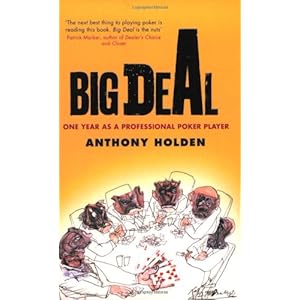
There are of course some exceptions to the rule. Anthony  Holden's "Big Deal" and Michael Craig's "The Professor, The Banker, and The Suicide King" are two very enjoyable non-strategy titles which have enjoyed, as I understand it, good sales figures.There are some good biographies out there, but generally they have never been big sellers. I'd expect a Negreanu, a Hellmuth, or an Ivey biography would sell well, but beyond that I think the life stories would have to be fascinating to be a big success. 

To get reasonable sales figures, I think a non-strategy title would need to have a mainstream appeal outside of poker. A Full Tilt, Black Friday, or an UltimateBet Superuser book all spring to mind. I think there is also the slight potential that some 'Funny gambling stories' books could be a profitable subject matter (I myself have started, and stopped, writing 'poker's greatest prop bets' several times).

Back to strategy. It is a very tough market. Despite being the only thing poker players really buy, it is tremendously competitive, samey, and quickly goes out of date.

Traditional no limit strategy becomes dated very quickly, and books are in competition with forums, training sites, and coaching, as well as with other books.

Having read tons of no limit books, it is very hard to filter out the nuggets of difference between each title or find anything truly unique. It is particularly frustrating when poker books trawl through the same old 'hand rankings/explaining position' standard stuff we have read a thousand times already. 

For a no limit book to stand a chance to be lucrative, it has to be vastly different, or more likely, has to be penned by a mega star of the game. And when I say mega star, I mean like Sam Trickett, Phil Ivey, Isaac Haxton, Jungleman, Isildur1 - someone who is either a household name or at least universally respected by their peers. There are so many good players out there these days that 99% of the good pro players would struggle to sell a book. 

Differentiating from no limit
For any other poker strategy book to sell well, it has to deviate from the norm. This is an area where I got very lucky hooking up with Jared Tendler - a mental game expert who essentially teaches something nobody else does in the game. I simply would not have got involved if it was instead just some guy who was crushing no limit hold'em, because even if it turned out to be a great book, it has a limited shelf life and lots of competition. Jared's work has no competition and (hopefully) is the sort of thing that could sell for years no matter how the game changes. 

So what else could sell in the crowded strategy market? I think we are due a good mixed games book for the modern era, and stud, 2-7 draw etc all could have a shot at selling well. One thing I think has been vastly overlooked so far is a strategy book for winning poker satellites. PLO still could sell, but that's getting competitive too. There is probably a decent short-stacker book waiting to be written, but there is plenty of information out there online for that. 

Then you have some really left of field titles that zero in on one aspect of poker skill. Books like Dusty Schmidt's Treat Your Poker Like a Business, which is more of a self management book than a strategy book, and of course the titles on physical tells and poker maths. I think there is possibly a (small) book out there on game selection waiting to be written. 

Making money from poker books
I've mentioned getting good sales figures, but what constitutes 'good'? The following figures I have got from some fellow authors and publishers in the poker industry. As I understand it, a good lifetime figure for a typical poker book (And by that I usually mean strategy book) is about 10,000 sales. That was at the height of the poker boom. 20,000 is considered exceptional. The average book in any industry or niche only expects to make $500 in sales these days, so if you think those figures are small, think again.

There are some books that comfortably surpass the 100,000 sales mark, but these are usually the real classics; SuperSystem, the Harrington books, the Theory of Poker, Gus Hansen's book, and probably a few other twoplustwo titles. The above titles are still selling very strong today despite being relatively old in the market (You can tell by looking at their sales rank on Amazon) so for the truly exceptional titles, they can prove a great long term winner. 

But most poker titles won't continue to sell after a few years, because they date so quickly. One way around this is pricing. Poker is one of the few niches where you can charge over $1,000 for a single book and people will buy it. You can still buy Tri Nguyen and Cole South's "Let There Be Range" for $1,500+ on Amazon. This is because bridging a knowledge gap in poker is perceived to be much more immediately damaging to the author than in other industries. Selling such a book for such a low price, it could be argued, could have an immediate negative impact on the authors earn rate if the wisdom within it is so good it could turn the readers into the new Isildur1. 

In reality, pricing the book so high is really a short term strategy designed to make a quick buck (No pun intended). It is actually more of an insurance strategy against the content getting outdated than it is a way of keeping the knowledge within a select few. When you price your book that high, you are basically asking for people to pirate it. All you are hoping for is that 30, 50, or 100 people buy it before every poker player has it emailed to them. Ironically setting a price so high probably guarantees more people see it than they would have otherwise. To stand a chance of getting a large number of  people buy your $100+ book, you have to be truly crushing the game (Cole South was at the time) and these days only a handful of players can claim that. 

Self publishing
But what about those of us who are not crushing the game, and essentially just want to write a book? Well first of all, I'd hope seeing the above has shown you there is some merit in offering to ghost write a book for a big name who wouldn't have the time or inclination to do it themselves. Secondly, I would suggest that you almost certainly should self publish your book. 

Although the potential to write a poker best seller is not great these days, we are living in a wonderful era for self published authors. Getting your book on kindle takes a few minutes, and you now have so many print-on-demand options that getting soft cover copies of it is also very cost efficient. The biggest thing that publishers can offer these days are exposure and potentially a cash advance. 
The advances I expect would be very small in poker, if they even exist at all any more, and after that you would likely only get something like 10-15% royalties AFTER your advance has been recouped in royalties. This is fine if you have no way of marketing your book on your own, but the poker world is exceptionally small, and if your book is good, people will hear about it. 

Build a ‘tribe’
There is a little maxim here which suggests you only need 500 people to love your book in order to make it a success. After that, word of mouth will sell it for you. This is what Jared and I have discovered with our book. We marketed very hard between the book launch on April 15 2011 (Yes, we released the book on Black Friday, sigh) and the end of the year for the Christmas rush, then we put the brakes on. Our biggest month at the time was Christmas, as you would expect, but after that we expected a drop in sales, because we had stopped actively marketing it.

But the strangest thing happened, January 2012's sales were almost as big as Decembers. February's sales were big too, and March, and so on. In fact June this year was our biggest month ever and it has seen no sign of slowing down. As soon as we stopped marketing our book aggressively, our sales have been at least 50% higher than every non-Christmas month in 2011 where we worked our asses off marketing it, and in some cases it has been 100-200% higher. 

We still do the odd bit of marketing here and there when a good opportunity comes up, but the reason the sales have been high since we stopped is because enough people have the book now to be talking about it. Every week I get people asking me questions or telling me what they think of the book on forums or on twitter, and on the occasions where I myself will tweet something about the book, I can always expect a reasonable amount of retweets from fans of the book. In fact, there have been a handful of people who loved the book so much that I feel we owe them a commission for promoting it for us for free. We are lucky also that quite a few influential figures in poker like the book, so when they do retweet or otherwise complement the book, they do so to a large audience. 

Word of mouth is genuinely the most powerful form of marketing in the world today, now that everyone has a twitter, Facebook, and poker forum account. For that reason, I would advocate all poker authors self publish their books and just concentrate on building up a small following, and giving that following the chance to talk about your work. I think one of the best things we did was engage with everyone our audience on twitter and Facebook and develop relationships with the people who really liked the book. The poker forums are also golden, possibly better than social media, and I think we owe a lot to the likes of Blondepoker, the PokerStrategy forum and 2+2 (The only paid advertising I would advocate is the latter's commercial marketplace). 

Beyond that, another easy way to market your book is by offering free content and excerpts of the book to blogs, websites, and magazines. As I have mentioned in several previous blog posts, poker editors are always on the lookout for free content and will happily let you promote your book as part of a free, non-spammy, offering. It is much more effective than having a paid advertisement ever will, because not only do most of us filter out adverts when we see them, but it also gives your target audience a great sneak peak of what they can expect, with a direct call to action for where they can go to get more. 

Business cards
Even if the book doesn't sell well, there is another advantage to writing one, and that is it serves as a great business card. Interest in Jared's private coaching skyrocketed as has his personal brand in the industry. He is a very well known and reputable name in poker as a direct result of the book. I myself have seen lots of doors open because of the book, I seem to get invited to more fun things, and my twitter following has increased significantly. 

So if you are thinking of writing a really niche poker book but worried it might be too niche, this is a reason to do it. If you know a lot about poker affiliate marketing but fear the audience is low, having a book on the subject might secure you a new job or consultancy work. If you are an expert in badugi, writing the book on the game might secure you some coaching work. I myself have been toying with writing a small book on the poker media industry, which I doubt would sell more than a 100 copies lifetime, but it would look great on my CV.

It sounds clichéd, but just the achievement of having a book out there is worth doing it for. It may be tough to get a best seller in this increasingly competitive market, but it is so easy to self publish these days that it shouldn't really cost you much more than your time.  

The State Of Print Magazines In Poker

7 comments

This week a thread was posted on 2+2 where a writer was outing WPT Poker Magazine for not having paid him for 7 months. It now looks like he is (hopefully) going to be paid as a direct result of him doing this.

I can see why a lot of people would think that 7 months was a scandalous amount of time to be paid, but I spoke to several of my fellow poker writer peers, and well all shrugged our shoulders and said “meh, pretty standard, I wouldn’t worry at 7 months”.

7 months was a long time to wait, but not as long as you would think. Most poker magazines have a policy of not paying until 3 months after the article is printed, and often it takes about 2 months between submitting the article and before it is printed. So even though I think 7 months is long, I wouldn’t even be chasing for the first 5.

I used to solely rely on magazines for my income. It once was a gold mine, but over the years I have watched that part of the industry change dramatically. I'm glad I got out of magazines, unfortunately I have done so with three magazines still owing me money to this day (Only one still exists).

I should also say that I have a great relationship with the guys at WPT, and I am quite confident that the guy will get paid. The following is not really a comment on WPT magazine, but most poker magazines I have dealt with (other than the B2B magazines).

There were some comments in the thread about the wait time was indicative of the magazine being close to bankruptcy. I don't agree with that, but I do confer that many of them live on the breadline. Lots of them literally rely on the same advertising revenue from issue x to pay for the freelance contributions for issue  x, with no spare budget waiting around for situations like this.  

This is not all magazines of course, for example I wouldn't expect this to be the case at PokerPlayer Magazine, because they are part of a larger publishing network, Dennis Publishing. But most of them are part of much smaller publishers, in some cases standalone ones.

It wasn't always this hard for poker magazines, there was once a time, right after the boom, where they had money to burn, and paid ridiculous amounts (I’ve never been paid better for a single article than I was the first year I started writing them). But the UIGEA hit the advertising budgets hard, and more recently, Black Friday did the same. Even non-US magazines felt the impact as hard, despite not being directly affected.

While the freelancers are being delayed by the magazines, the magazines are being delayed by the advertisers. This doesn't make it ok for the magazines to string the freelancers along in the meantime, but it is important to know they are part of a long an arduous chain, and often get screwed out of money themselves (Sadly, advertisers not paying is a frequent occurrence in poker).

This may seem odd to many, that poker magazines are so dependent on advertising revenue. The fact is that most of the time, poker magazines don't rely on sales, or at least, they only make up a small part of their revenue which is deemed a bit of a bonus at best. In fact, many advertising packages are based on the presumption that the issues will be distributed for free in casinos, guaranteeing lots of gamblers will see them.

To give an extreme example of this, I did some work for GX magazine, who never paid me. It turned out that they weren't a real magazine at all, they just printed a few hundred copies of their pretend magazine to show advertisers, so they could hoard in the ad revenue without worrying about the printing costs. Check out this blog from Nick Pryce, someone who worked for them, to learn more about them.

The last frustrating part of the process with poker magazines is that the editor is not the boss, not in the traditional sense at least. Most freelancers expect the buck to stop with him, but in reality they often are pretty powerless when it comes to payroll. Editors are often in an impossible situation here, where they have to take the flak when people don't get paid, but can't do anything to influence it.

They only thing they can, and should do, is create realistic expectations with freelancers from the start. 

Times are tough for print magazines in general, and even harder for poker magazines. Most of the best content these days, or at least the most up to date, is available online and advertising revenue is getting tighter by the day.

Most magazines these days rely on free contributions from people with something to promote. Strategy articles from sponsored players, news articles branded with the logos of a news site, tournament reports provided by the people organising the tournament. The few bits and bobs I have done for magazines in the last year or so has been to promote my book more than anything.

Anyone looking to freelance for magazines these days, in my opinion, should be very aware of this. There is still a future for print magazines in poker, but it will be on shoestring budgets. There are still people out there that will pay you to write for poker magazines, but it is not necessarily the guys that publish them.    

Copyright © Barry Carter Poker